 Kurt Abbott Bestul
Black phone operator bot project#
Last tended 2026-02-28
Sad prologue#
As you might have guessed, the black phone project is a near duplicate of the red phone project. The USPS performed an in-transit disappearing act on the red phone (as well as all other contents of the box it was in); they DID however deliver an empty, mangled fragment of said box to its destination -- with address and postage stubbornly clinging to the surviving cardboard. By this cruel humor, they deem the package to have been delivered. So we are currently in a Catch-22 saga of trying to make any postal staff whatsoever acknowledge that we truly wished for the contents of the box to make it to the destination together with the address-and-postage fragment of cardboard.
But enough about that. Our goal was still to have such a phone ready for our daughter and her fiancée's wedding. Consequently, I scoured a nearby collectibles and antiques mall and was lucky to find a faux-vintage, faux-rotary-dial, black-finish phone that could undergo nearly the same conversion -- sans the geeky LEDs. The conversion and QA/QC testing are complete as I write this, and the pics and a few details are below.
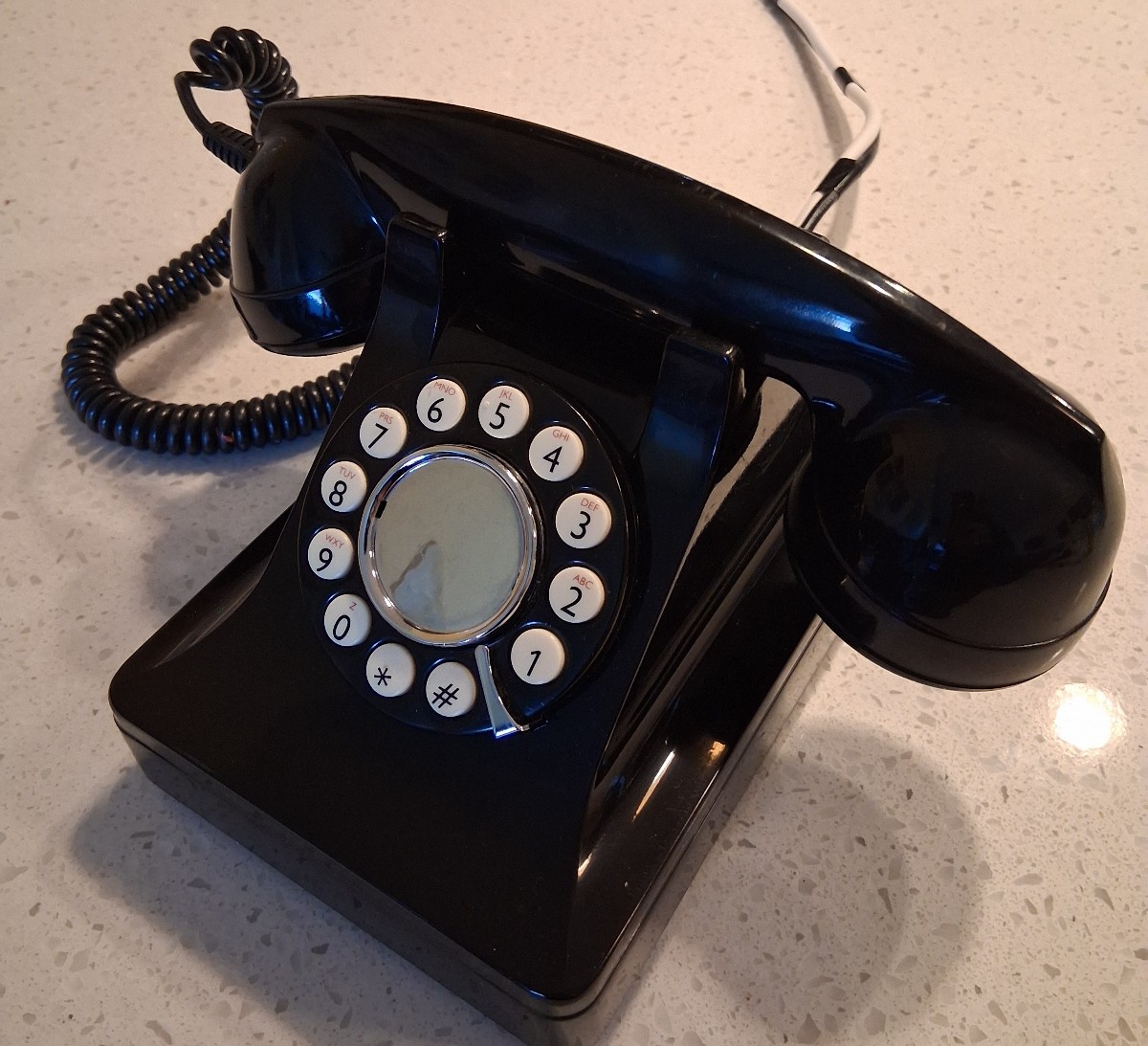
Main view of the phone
(click to enlarge)
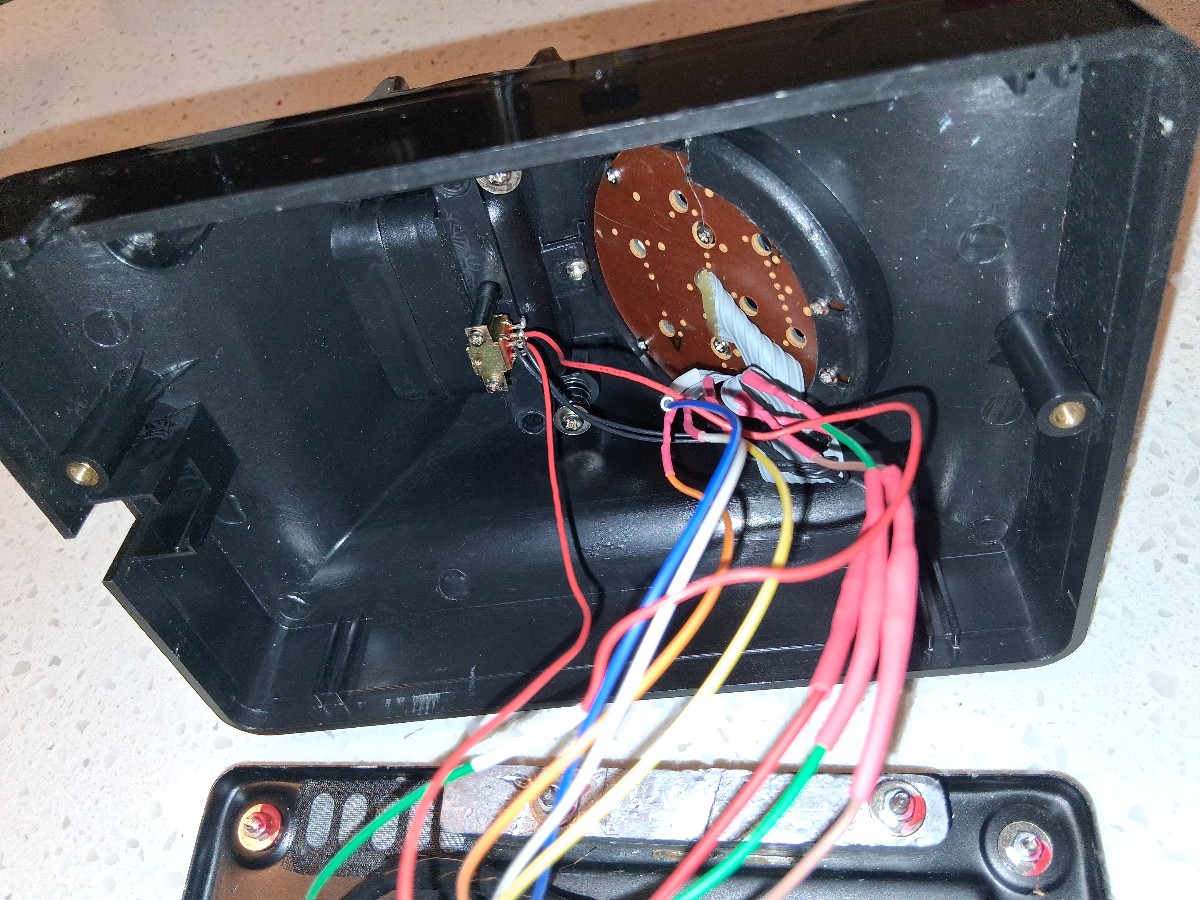
Inner view of top shell
(click to enlarge)
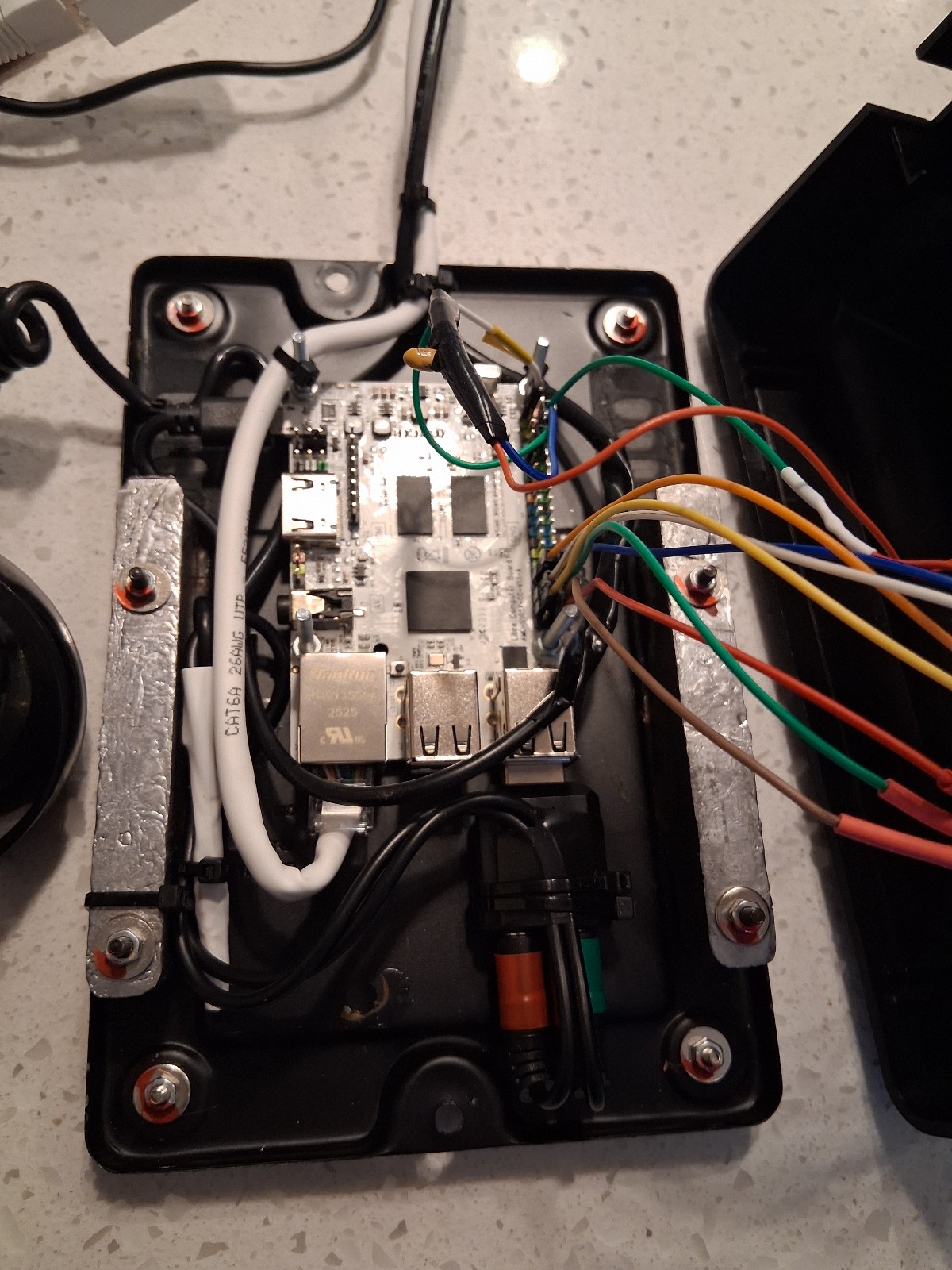
Internal brain view
(click to enlarge)
Here is the quick outline of the completed project -- much of it the same as the red phone project:
- Built upon a no-name, 80's, faux-vintage, faux-rotary-dial touchtone phone
- Salvaged (and re-integrated) components
- keypad
- handset coiled cord
- handset earpiece and microphone
- handset cradle switch (indicates on/off hook)
- housing and chasis
- New/modern components
- Libre Computer AML-S905X-CC single board computer with 128GB eMMC storage
- Sabrent USB Sound Adapter (for mic input and handset earpiece output)
- Various resistors, and capacitors needed to integrate the hardware to the computer
- The handset cradle switch and the touchpad signal are integrated to the single board computer via its GPIO (input/output) pins
- The software "brain" of the phone is written in Python
- The phone requires a wired network connection only for 1) pulling down software updates, and 2) uploading the guest recordings to a cloud repository. It is otherwise coded to operate without network access.
- Salvaged (and re-integrated) components
- The phone provides the following options to the user:
- Record a message for the wedding couple
- Hear a fun sample greeting from one of the wedding couples' siblings
- Cycle through fun sample greetings from the rest of the siblings
- Repeat the menu
- BONUS: be teasingly scolded if you press a non-allowed key
- For each of the prompts, the phone employs audio clips recorded by the wedding couple
- Cosmetic details:
- The phone's plastic was in pretty good condition
- To bring the plastic back to life in a couple spots, I polished it gently with blue jeweler's rouge on a cotton-muslin buffing wheel
For geeks who may be interested, this project is held in a GitLab repo. The repo is currently private, but I intend to de-indentify the relevant elements and then make the project public in the future. Use the site contact info or post a comment below if you have questions or wish for the project to be public sooner.
Leave a comment
Submissions are subject to review and approval